
Introduction: A Culinary Journey Through Thailand
Few dishes capture the heart and soul of Thai cuisine quite like coconut curry. Creamy, aromatic, and deeply satisfying, Thai coconut curry is more than just a meal—it’s an experience. Infused with herbs, spices, and the richness of coconut milk, this dish represents the perfect balance of flavour: spicy, sweet, salty, and savory.
Whether you’ve tasted it in a bustling street market in Bangkok or tried to recreate it at home, Thai coconut curry leaves a lasting impression. Its ability to comfort, excite the palate, and showcase Thailand’s culinary traditions is why it has become a global favorite. In this article, we’ll explore the rich flavors, types, ingredients, and cultural significance of Thai coconut curry—and show you why it deserves a place in your kitchen.
1. What Makes Thai Coconut Curry Unique?
The Harmony of Flavours
At the heart of Thai cuisine is the philosophy of balance. Thai coconut curry is a perfect example, blending:
- Creaminess from coconut milk
- Heat from fresh chilies or curry pastes
- Herbal brightness from ingredients like kaffir lime leaves and lemongrass
- Umami from fish sauce or soy sauce
- Sweetness from palm sugar or natural coconut
This harmony results in a dish that’s complex, yet comforting—rich without being heavy, spicy without overwhelming.
A Versatile Base for Any Ingredient
One of the reasons Thai coconut curry is so beloved is its flexibility. It can be:
- Vegetarian with tofu and mixed vegetables
- Protein-rich with chicken, beef, pork, or shrimp
- Customized with mushrooms, eggplants, bamboo shoots, or fresh herbs
No matter the combination, the coconut milk ties everything together with a luxurious mouthfeel and depth of flavour.
2. Exploring the Different Types of Thai Coconut Curry
There isn’t just one type of Thai curry—there are several, each with its own personality, spice level, and flavor profile. Let’s explore the most popular varieties:
Green Curry (Gaeng Keow Wan)
Known for its vibrant color and fresh heat, green curry is made using green chilies, Thai basil, and kaffir lime. It’s often served with chicken, eggplant, and bamboo shoots. The curry is sweet and fragrant, balanced by the creamy coconut milk.
Best for: Those who enjoy medium heat and a slightly sweeter, herbaceous profile.
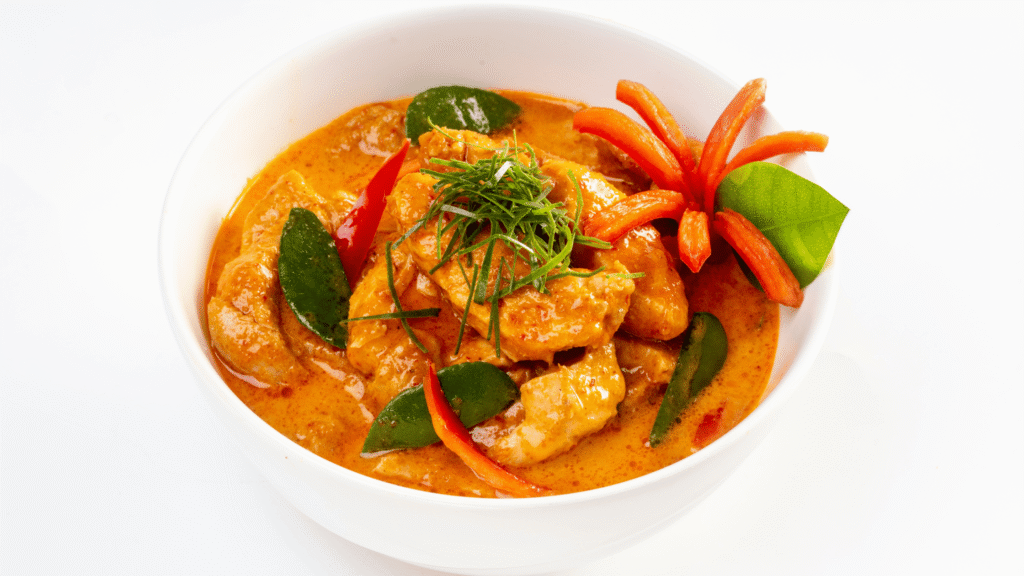
Red Curry (Gaeng Phed)
Red curry gets its bold hue from dried red chilies and its flavor from garlic, galangal, and coriander root. It’s slightly spicier than green curry and commonly paired with meats like beef, duck, or chicken.
Best for: Lovers of bold, savory flavours with a kick of spice.
Yellow Curry (Gaeng Karee)
This is the mildest and most turmeric-forward curry. Influenced by Indian cuisine, it’s rich in cumin, cinnamon, and cardamom, and pairs beautifully with potatoes and chicken.
Best for: Those who prefer milder spice and earthy, warming flavors.
Panang Curry (Gaeng Panang)
Panang is thicker and slightly sweeter than red curry, often made with crushed peanuts for a richer texture. It clings to the meat and is often served with beef or chicken.
Best for: Those who like a hearty, peanut-infused curry with moderate spice.
Massaman Curry
Massaman curry is a slow-cooked, Muslim-influenced dish that combines Thai spices with Indian and Persian ingredients like cardamom, cloves, and cinnamon. It typically includes beef, potatoes, and roasted peanuts.
Best for: Fans of fusion flavours, especially those who enjoy sweet-savory profiles.
3. Key Ingredients That Define the Flavour
Understanding what goes into a Thai coconut curry helps you appreciate its complexity. Here are the essential components:
Coconut Milk
The star of the dish, coconut milk adds body, creaminess, and a mellow sweetness that balances out the spice. Freshly squeezed coconut milk is preferred in traditional Thai cooking, but canned versions work well too.
Curry Paste
This is where the magic begins. Whether it’s red, green, or yellow, curry paste typically includes:
- Lemongrass
- Galangal or ginger
- Garlic
- Shallots
- Chilies
- Kaffir lime peel
- Shrimp paste (for non-vegetarian versions)
These ingredients are ground into a paste and sautéed in oil to release their fragrance before coconut milk is added.
Fish Sauce and Palm Sugar
- Fish sauce brings saltiness and umami.
- Palm sugar adds a subtle caramel-like sweetness.
Both ingredients are crucial for achieving the signature sweet-salty-spicy balance.
Herbs and Vegetables
Thai basil, kaffir lime leaves, and Thai eggplants are commonly added toward the end of cooking for brightness and crunch. Vegetables like bell peppers, mushrooms, and carrots provide color and nutrition.
4. How to Make Thai Coconut Curry at Home
Basic Cooking Steps:
- Sauté the Curry Paste: Fry in a bit of oil until aromatic (2–3 minutes).
- Add Coconut Milk: Stir to combine and bring to a gentle simmer.
- Add Protein and Vegetables: Simmer until cooked through.
- Season: Adjust taste with fish sauce, sugar, and lime juice.
- Finish with Herbs: Add fresh Thai basil, lime leaves, or cilantro before serving.
Serve hot with jasmine rice or rice noodles, and garnish with sliced chilies or a lime wedge for extra brightness.
5. Thai Coconut Curry Around the World
Thanks to its unique taste and ease of adaptation, Thai coconut curry has become a global favorite. Restaurants from London to Los Angeles offer their takes, often fusing Thai techniques with local ingredients. Vegan and gluten-free versions are also widely available, making the dish even more accessible.
Home cooks love Thai curry for its simplicity and adaptability. With a few pantry staples—like canned coconut milk and jarred curry paste—you can whip up a dish that tastes like it came straight from Bangkok.
Conclusion: A Dish Worth Savoring
Thai coconut curry isn’t just food—it’s a celebration of culture, flavor, and comfort. Each spoonful offers a journey through Thailand’s culinary heritage, from the fragrant herbs of the countryside to the fiery chilies of the market stalls. Whether you prefer it mild and creamy or bold and spicy, this dish offers something for everyone.
So next time you’re wondering what to cook, remember that Thai coconut curry is more than a recipe—it’s an invitation to experience richness, warmth, and unforgettable deliciousness in every bite. All it takes is one pot, a few key ingredients, and a love for bold, balanced flavor.